
Every city has buildings that whisper stories of the past, and Pretoria is no exception. From grand colonial structures to striking modernist designs, its architecture paints a vivid picture of history, culture, and transformation.
A City Built on Stories
Pretoria’s skyline reflects its complex history. The city, founded in 1855, has grown from a Voortrekker settlement into South Africa’s administrative capital. Each era left its mark, creating a unique blend of Dutch, British, and modern South African architectural influences. Some buildings symbolize power and politics, while others represent resilience and progress. Whether you admire historical landmarks or sleek contemporary structures, Pretoria’s architecture offers something for everyone.
The Union Buildings: Pretoria’s Crown Jewel
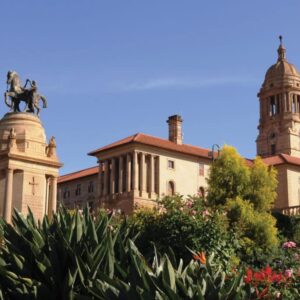
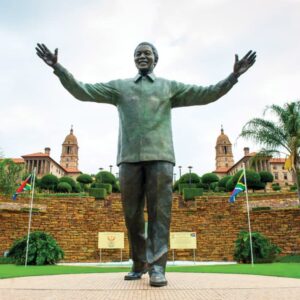
Perched on Meintjieskop, the Union Buildings stand as Pretoria’s most iconic landmark. Designed by Sir Herbert Baker and completed in 1913, these sandstone structures house the South African government’s executive offices. The buildings feature Edwardian and Neoclassical architecture, with long colonnades and a central amphitheatre. Beyond politics, the Union Buildings Gardens attract visitors who enjoy the stunning city views and historical significance. The famous statue of Nelson Mandela unveiled in 2013, stands as a symbol of unity and democracy.
Church Square: The Heart of Historic Pretoria
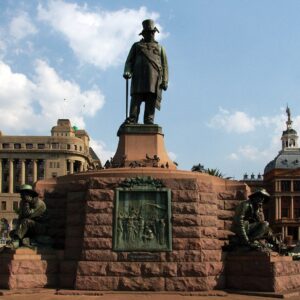
As the city’s original centre, Church Square holds deep historical importance. Established in the 19th century, it became Pretoria’s commercial and administrative hub. Today, it remains surrounded by well-preserved colonial-era buildings, each with its own story.
Notable Buildings on Church Square:
- Palace of Justice: This grand Victorian-era building hosted the Rivonia Trial, where Nelson Mandela received a life sentence in 1964.
- Old Raadsaal: Built in 1889, this striking red-brick structure once served as the seat of the Transvaal Republic’s government.
- General Post Office: Completed in 1910, its detailed stonework and symmetrical design make it a classic example of British colonial architecture.
The Voortrekker Monument: A Tribute to History
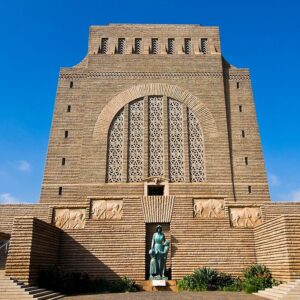
Rising above Pretoria’s southern skyline, the Voortrekker Monument is an architectural marvel. Designed by Gerard Moerdijk and completed in 1949, it commemorates the Voortrekkers’ Great Trek. The massive granite structure, inspired by Egyptian and Art Deco influences, houses a historical museum. Inside, visitors find the Hall of Heroes, featuring detailed friezes that depict the Voortrekkers’ journey. A climb to the top rewards visitors with panoramic views of the city.
Loftus Versfeld Stadium: More Than Just Sports
While sports fans know Loftus Versfeld Stadium for its legendary rugby matches, its architecture also tells a story. Established in 1906, it has undergone multiple renovations, evolving into a 51,762-seat world-class stadium. The structure reflects Pretoria’s sporting heritage and showcases the city’s growth. Hosting events beyond rugby, it has welcomed FIFA World Cup matches, international concerts, and political gatherings, making it a true multipurpose landmark.
Freedom Park: A Modern Symbol of Remembrance
Unlike Pretoria’s colonial-era structures, Freedom Park embodies modern South African architecture. Designed to honour the country’s journey to democracy, it stands on Salvokop Hill, overlooking the city. The park includes the Wall of Names, inscribed with the names of those who fought for freedom. Its Isivivane Garden offers a spiritual space, while the Museum of the Struggle showcases South Africa’s rich heritage. The design blends natural elements with contemporary style, creating a peaceful yet powerful space.
Pretoria City Hall: The Grand Civic Building
Completed in 1935, Pretoria City Hall reflects Pretoria’s transition into a major metropolitan area. The building features Cape Dutch and Beaux-Arts influences, with its iconic clock tower standing 50 meters tall. The City Hall once hosted political meetings, orchestras, and civic events. Today, while government offices have moved, the building remains a proud reminder of Pretoria’s architectural and cultural legacy.
The South African Reserve Bank: A Tower of Finance
Breaking from traditional styles, the South African Reserve Bank Headquarters represents Pretoria’s modernist era. Completed in 1988, the 150-meter glass skyscraper dominates the central business district. Its sleek glass and steel facade reflects Pretoria’s evolution into a financial hub. As the tallest building in the city, it stands in contrast to its historic surroundings, signalling progress and economic strength.
A City of Architectural Wonders
Pretoria’s architecture isn’t just about bricks and mortar—it’s about stories, people, and the city’s evolution. From colonial-era landmarks to contemporary designs, each building reflects a chapter of South Africa’s history. Whether you’re admiring the grandeur of the Union Buildings, exploring the heritage of Church Square, or visiting the symbolic Freedom Park, Pretoria’s skyline tells a tale of transformation. Next time you walk its streets, take a moment to appreciate the architectural masterpieces that shape this vibrant city.
FAQs
1. What is the most famous building in Pretoria?
The Union Buildings are Pretoria’s most iconic structure, serving as the seat of government and a symbol of national unity.
2. Why is Church Square historically significant?
Church Square was Pretoria’s original centre and remains home to key colonial-era buildings, including the Palace of Justice.
3. Who designed the Union Buildings?
British architect Sir Herbert Baker designed the Union Buildings, which were completed in 1913.
4. What is unique about the Voortrekker Monument?
The Voortrekker Monument’s Art Deco and Egyptian-inspired design makes it one of South Africa’s most striking memorials.
5. Can you visit Freedom Park?
Yes! Freedom Park is open to the public and offers museums, gardens, and memorials dedicated to South Africa’s history.
6. What is the tallest building in Pretoria?
The South African Reserve Bank Headquarters, standing at 150 meters, is the tallest building in Pretoria.
7. How old is Pretoria City Hall?
Pretoria City Hall was completed in 1935, making it nearly a century old.
8. Is Loftus Versfeld Stadium used for events other than rugby?
Yes! Loftus Versfeld hosts football matches, concerts, and political events, making it a multi-use venue.
9. What kind of architecture is found in Pretoria?
Pretoria showcases a mix of Edwardian, Victorian, Cape Dutch, Art Deco, and modernist architectural styles.
10. Are there guided tours of Pretoria’s historic buildings?
Yes, many landmarks, including Church Square, the Union Buildings, and Freedom Park, offer guided tours.