
Majestic. Iconic. Steeped in history. The Union Buildings stand tall, not just as a landmark but as a symbol of South Africa’s journey.

 Images source: https://www.visittshwane.co.za/gallery/gallery-union-buildings/#tab-id-4
The Union Buildings: Pretoria’s Crown Jewel
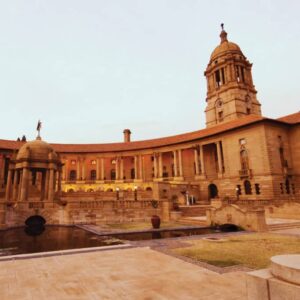
Perched atop Meintjieskop and overlooking Pretoria’s cityscape, the Union Buildings Pretoria have shaped South Africa’s history for over a century. Since their completion in 1913, these grand sandstone structures have remained the epicentre of governance, democracy, and transformation. Sir Herbert Baker, a renowned architect, designed the Union Buildings to symbolize unity, leadership, and resilience. With distinctive domes, sweeping terraces, and breathtaking gardens, they represent more than just a government complex—they stand as a national treasure. But how did these buildings come to be? What role do they play in modern South Africa? And why do they remain one of Pretoria’s most cherished landmarks? Let’s take a journey through time and uncover the fascinating story of the Union Buildings.A Vision Carved in Sandstone
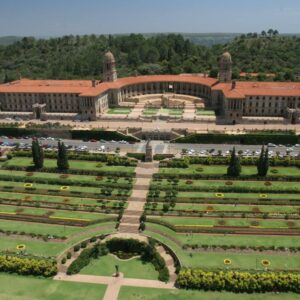
When British architect Sir Herbert Baker envisioned the Union Buildings, he wanted them to reflect both the dignity and ambition of a young nation. Drawing inspiration from neo-classical and Cape Dutch styles, he designed a structure that would withstand the test of time. His masterpiece included:- A grand crescent shape represents inclusivity and national unity.
- Two domed towers, symbolizing the unification of English- and Afrikaans-speaking communities.
- A central amphitheatre, used for official ceremonies and historic speeches.
- Locally sourced golden sandstone, giving the buildings their distinctive warm hue.
Pretoria Then & Now: The Changing Face of the Capital
When the Union Buildings opened in 1913, Pretoria functioned as a quiet administrative town with wide, jacaranda-lined streets and horse-drawn carts. Government officials and military personnel formed most of the population. Today, Pretoria thrives as a modern metropolis, with skyscrapers, bustling markets, and diverse cultural spaces. Despite this transformation, the Union Buildings continue to anchor the city’s identity, bridging the past and the present. Through political transitions and societal shifts, they have remained a steadfast symbol of governance and national pride.Witnessing History: Key Moments at the Union Buildings
The Union Buildings have hosted some of South Africa’s most significant historical events:- Nelson Mandela’s Inauguration (1994): The world watched as Mandela, the country’s first democratically elected president, took his oath of office on the steps of the Union Buildings. The gardens overflowed with people, and millions tuned in worldwide.
- The 1956 Women’s March: In one of apartheid’s most powerful protests, 20,000 women marched to the Union Buildings to oppose the oppressive pass laws.
- Nelson Mandela’s Memorial (2013): Following his passing, thousands gathered at the Union Buildings to pay their respects, demonstrating his lasting impact on the nation.
The People’s Gardens: A Hidden Gem in Pretoria
Beyond politics, the Union Buildings Pretoria houses some of the most beautiful gardens in the city. Open to the public, these well-maintained grounds provide a peaceful retreat with:- Terraced lawns, featuring indigenous plants and vibrant flowers.
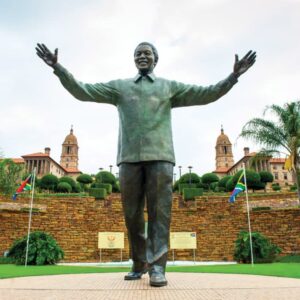
- The Nelson Mandela statue is a 9-meter-tall bronze tribute to the country’s greatest leader.
- Breathtaking city views, make it a perfect location for picnics and photography.
Fascinating Facts About the Union Buildings
- The Union Buildings stretch 275 meters in length, making them longer than Buckingham Palace.
- Builders sourced golden sandstone from a Pretoria quarry to construct the buildings.
- During World War II, the amphitheatre functioned as a vegetable garden to support the war effort.
- Positioned at one of Pretoria’s highest points, the Union Buildings offer spectacular panoramic views of the city.
- Although Sir Herbert Baker designed the buildings, he never saw their completion because he had returned to England before the inauguration.