
Beneath Pretoria’s bustling cityscape lies a timeless gem—one that whispers the stories of the past while standing firm in the present. This is Church Square, the heart of Pretoria, where history, politics, and culture intersect in a way that few places can rival.
A Timeless Icon: The History of Church Square
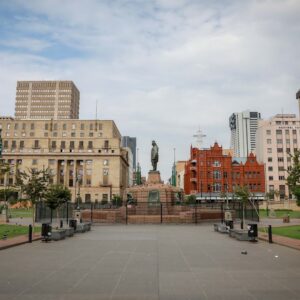
Church Square, the beating heart of Pretoria, is more than just an open plaza. It’s a place where history was written, rewritten, and continues to evolve. Nestled in the city centre, it has witnessed Pretoria’s transformation from a quiet Boer settlement to a modern metropolis. The square has stood as a silent observer to defining moments—from the days of the Zuid-Afrikaansche Republiek (ZAR) to the country’s road to democracy. At its core stands the statue of Paul Kruger, a prominent figure in South African history, surrounded by grand historical buildings that still whisper the echoes of the past.
But how did Church Square come to be? And what makes it such an integral part of Pretoria’s identity?
The Birth of a Landmark
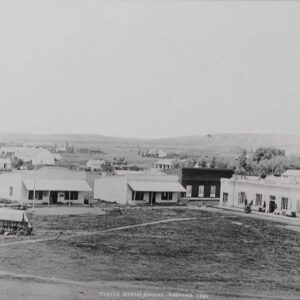
Church Square was initially a simple gathering place in the mid-19th century. Named after the Dutch Reformed Church that once stood at its centre, the square was where farmers, traders, and townsfolk met for markets and religious services. The first church was a modest reed-structured building, later replaced by a more solid construction in the 1850s. However, by the late 19th century, the church was demolished to make way for a growing Pretoria. Despite the church’s absence, the name “Church Square” endured. As Pretoria expanded, so did the significance of this central hub. It became the focal point for civic administration, political decisions, and economic activity—earning its place as the city’s historic heart.
Paul Kruger’s Presence: The Square’s Most Recognizable Figure
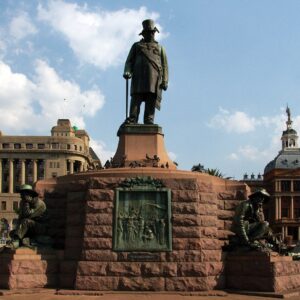
At the heart of Church Square, the bronze statue of Paul Kruger dominates the scene. Designed by renowned sculptor Anton van Wouw, it was unveiled in 1954, paying homage to the former president of the South African Republic. Kruger’s influence on Pretoria’s history is undeniable. As a leader during the Boer Wars and a key figure in the country’s resistance against British rule, he remains a symbol of Afrikaner nationalism. However, like many historical figures, his legacy is complex and often debated. Surrounding the statue are four burghers—representing the citizens of the old republic—guarding their leader and symbolizing the struggles and triumphs of the past.
Architectural Marvels: The Buildings of Church Square
Church Square’s charm isn’t just in its history but also in the stunning architecture that encircles it. Each building tells a story, reflecting the city’s different eras and influences.
The Palace of Justice
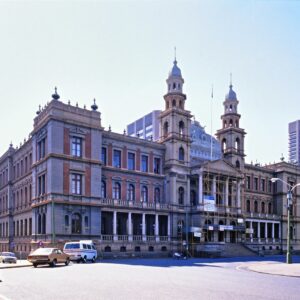
One of the most striking structures on the square, the Palace of Justice, is famous for being the site of the Rivonia Trial in 1964. It was here that Nelson Mandela and other anti-apartheid leaders were sentenced to life imprisonment—a moment that changed South Africa’s course forever. With its elegant neoclassical design, the building remains an active courthouse, yet its walls hold the weight of history, reminding visitors of South Africa’s long journey to justice.
The Old Capitol Theatre
Once a grand entertainment venue, the Old Capitol Theatre was a cultural hotspot in Pretoria. Although it no longer operates as a theatre, its presence near Church Square evokes memories of a bygone era when live performances and silent films enthralled audiences.
Tudor Chambers
This quaint yet striking Edwardian-style building adds a European charm to the square. Once housing law firms and offices, today it stands as a preserved relic of Pretoria’s early 20th-century architecture.
The Old Nederlandsche Bank Building
A stunning example of Dutch-influenced architecture, this building served as a major financial institution during the late 1800s. Its rich facade and detailed masonry are a testament to Pretoria’s economic boom during the gold rush era.
Church Square in Apartheid and Beyond
During the apartheid years, Church Square was a site of tension and change. Protests, government speeches, and major political movements unfolded in its open space. For many, it was a place of division—where laws and decisions shaped the future of South Africa’s people. However, with the fall of apartheid, Church Square evolved. It transformed into a place of reflection, where South Africans of all backgrounds come together. Today, it is a space where history is acknowledged, but the focus remains on progress and unity.
Church Square Today: A Blend of Old and New
Modern-day Church Square remains a vibrant hub, attracting both locals and tourists. It serves as a gathering place for street performers, photographers, and historians alike. Cafés and restaurants now line the surrounding streets, offering visitors a place to pause and soak in the surroundings. Whether you’re sipping coffee while admiring the architecture or strolling through the square on a sunny afternoon, the essence of Pretoria’s past is always present. Moreover, initiatives have been put in place to restore and maintain the historic buildings, ensuring that Church Square remains a living monument rather than a forgotten relic.
Church Square is not just a place—it’s an experience. It stands as a bridge between Pretoria’s past and present, constantly reminding visitors of the city’s layered history. Whether you are a history buff, a photographer, or just someone looking to explore the city, this landmark offers a journey through time that is both enriching and unforgettable. So next time you find yourself in Pretoria, take a stroll through Church Square. Look up at the grand buildings, stand before Kruger’s statue, and let history whisper its stories to you.
FAQs
1. What is Church Square famous for?
Church Square is known for its historical significance, serving as the heart of Pretoria’s political and social life since the 19th century. It is home to notable buildings like the Palace of Justice and the Paul Kruger statue.
2. Who built Church Square?
The square itself developed organically as the city grew, but its surrounding buildings were designed by prominent architects of the time, such as Sytze Wierda.
3. What happened to the church in Church Square?
The original Dutch Reformed Church was demolished in the late 19th century to accommodate Pretoria’s expansion.
4. Is Church Square open to visitors?
Yes! Church Square is open to the public, and visitors can explore its landmarks and soak in the history at any time.
5. Why is Paul Kruger’s statue in the centre of the square?
Paul Kruger played a significant role in South African history, and his statue was placed in the centre of Church Square as a tribute to his leadership during the Boer era.
6. What major events took place at Church Square?
The Rivonia Trial, which led to Nelson Mandela’s imprisonment, was held at the Palace of Justice on Church Square. The square has also been a focal point for political protests and gatherings.
7. Is Church Square safe to visit?
During the day, Church Square is generally safe. However, like any city centre, visitors should remain aware of their surroundings.
8. Can you take guided tours of Church Square?
Yes, several local tour operators offer historical walking tours that include Church Square and its surrounding landmarks.
9. Are there any museums near Church Square?
Yes, the Kruger Museum and the Pretoria Art Museum are a short distance away and offer deeper insights into the city’s history.
10. What is the best time to visit Church Square?
Early mornings or late afternoons offer the best light for photography and a quieter experience.